
Tuner
On Francis Bacon

I recently watched Tuner in the cinema. It’s a highly enjoyable film about a piano tuner (the long-lashed Leo Woodall) with a hearing condition/sensitivity who is somewhat coerced (for financial reasons) to take a side hustle as a safe cracker. It is not especially complicated or reinvents the wheel in any way, but I appreciated how it wove 70s-style heist and gentle rom-com into something that, granted, sometimes gets a bit silly in the third act, but is a Fun Time at the Movies™️. Most importantly, the film falls into my category of films that include art by a renowned artist. In this instance, one by Francis Bacon.
I always enjoy seeing a well-known artwork in media, whether Picasso’s Woman Sitting with Crossed Arms (1937) in Oppenheimer, or Hilma af Klint’s The Swan, No. 1 (1914–15) in Amazon’s very good Mr & Mrs Smith. A confession: I can’t place the exact artwork in Tuner aside from it being one of Bacon’s distorted portraits, or his Autoportraits, but it got me thinking about why this artist was chosen to conceal a safe.
Bacon’s Autoportraits aren’t “pretty”, but that’s the point. They are intended to convey internal turmoil and psychological distortion; they aim to elicit a visceral reaction, yet they are always captivating and absorbing. They draw you in and make you feel. They are internal renderings of an external surface. Bacon’s portrait of his friend, the artist Isabel Rawsthorne, is a similar example, as was Bacon’s description, “what I want to do is to distort the thing far beyond the appearance, but in the distortion to bring it back to a recording of the appearance.”
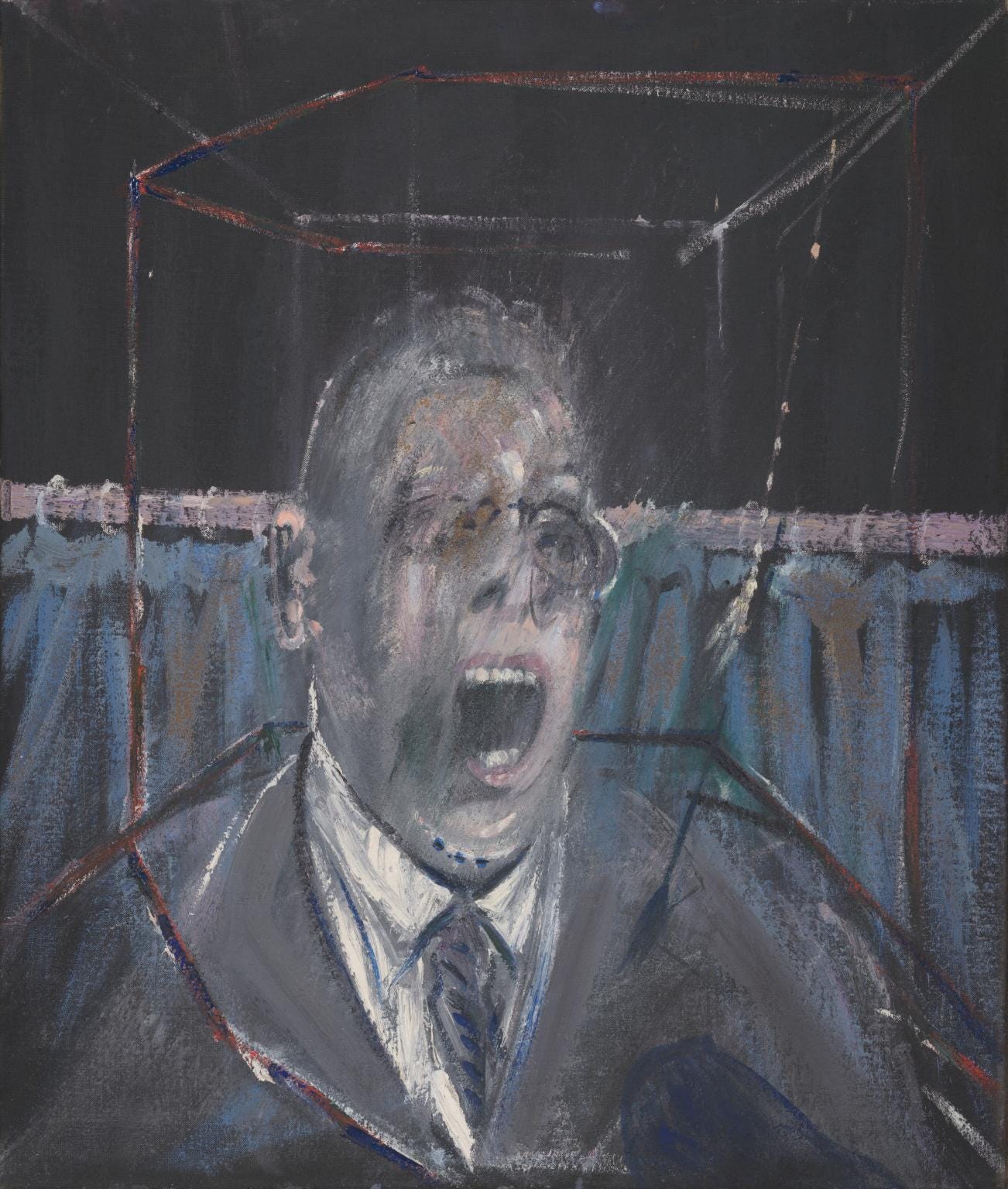
Distortion is a key part of Tuner, as Niki hears things too sharply, too acutely, too intensely, and has to wear earplugs to reduce horrendous, extreme noise, such as sirens, alarms, and airhorns, which induce an extreme and nauseating reaction. A child prodigy who had to sacrifice his piano playing career due to this affliction, Niki is placed in a number of situations that even had this cinemagoer with regular hearing covering her ears in the cinema. In this example, Bacon’s Study for a Portrait (1952), potentially and partially inspired by Sergei Eisenstein’s Battleship Potemkin (1925)—the distorted mouth—is a good rendering of the anguish Niki feels in these moments.
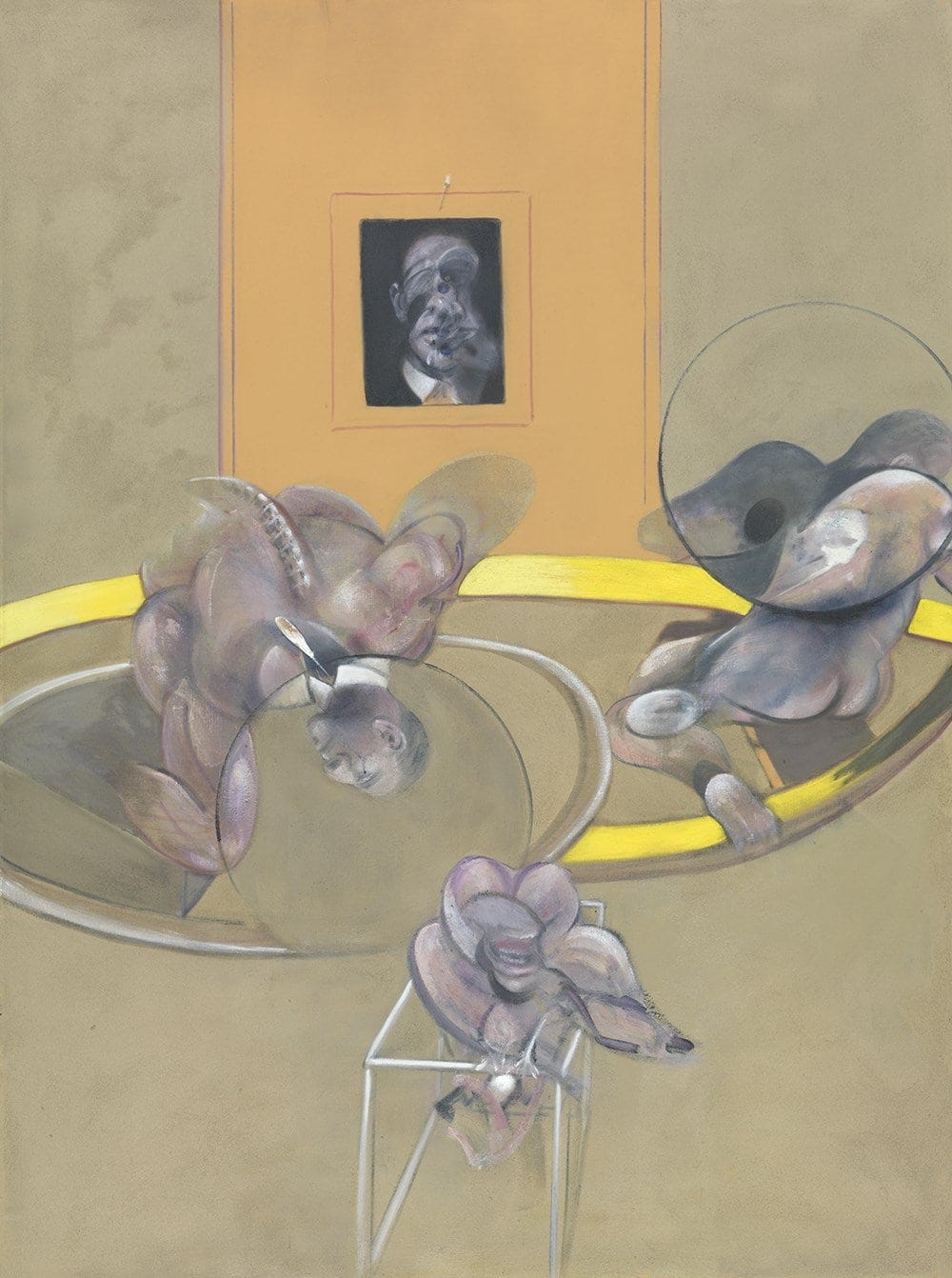
Not all of Bacon’s paintings were so unsettling, so hazily blurred. In Three Studies for Self Portrait (1976), there is more clarity and resolution—something that occurs, in a way—of sorts, but not entirely—by the end of Tuner. Here, there is more colour, the image is more fully resolved, but there is still some way to go for total and complete resolution.

Another aspect of Tuner that appealed to my interests is the inclusion of Nina Simone’s “Sinnerman.” This is not the first time this track has been used in a heist film, most notably in my much-loved reworking of 1999’s The Thomas Crown Affair starring Pierce Brosnan and Rene Russo—a film filled with New York Surrealist undertones—which I wrote about here. More art in (heist) films, please.
(*Apologies for the somewhat scrappy nature of this dispatch! I’ll have more for you soon*).
I came for the heist movie and left thinking about Francis Bacon, which is not how I expected my afternoon to go.
After reading this, I ended up down an internet rabbit hole Googling both the film and the artwork. The connection you made between Bacon's distortions and Niki's relationship with sound made me appreciate just how much detail goes into projects like this, and how much storytelling can happen in the background if you're paying attention.
Really enjoyed this piece. Nice work!